BLOG
A Masterclass on AI in Ecommerce
From global trends to local AI ecommerce in Hong Kong strategies, discover how to master the future of AI in ecommerce.
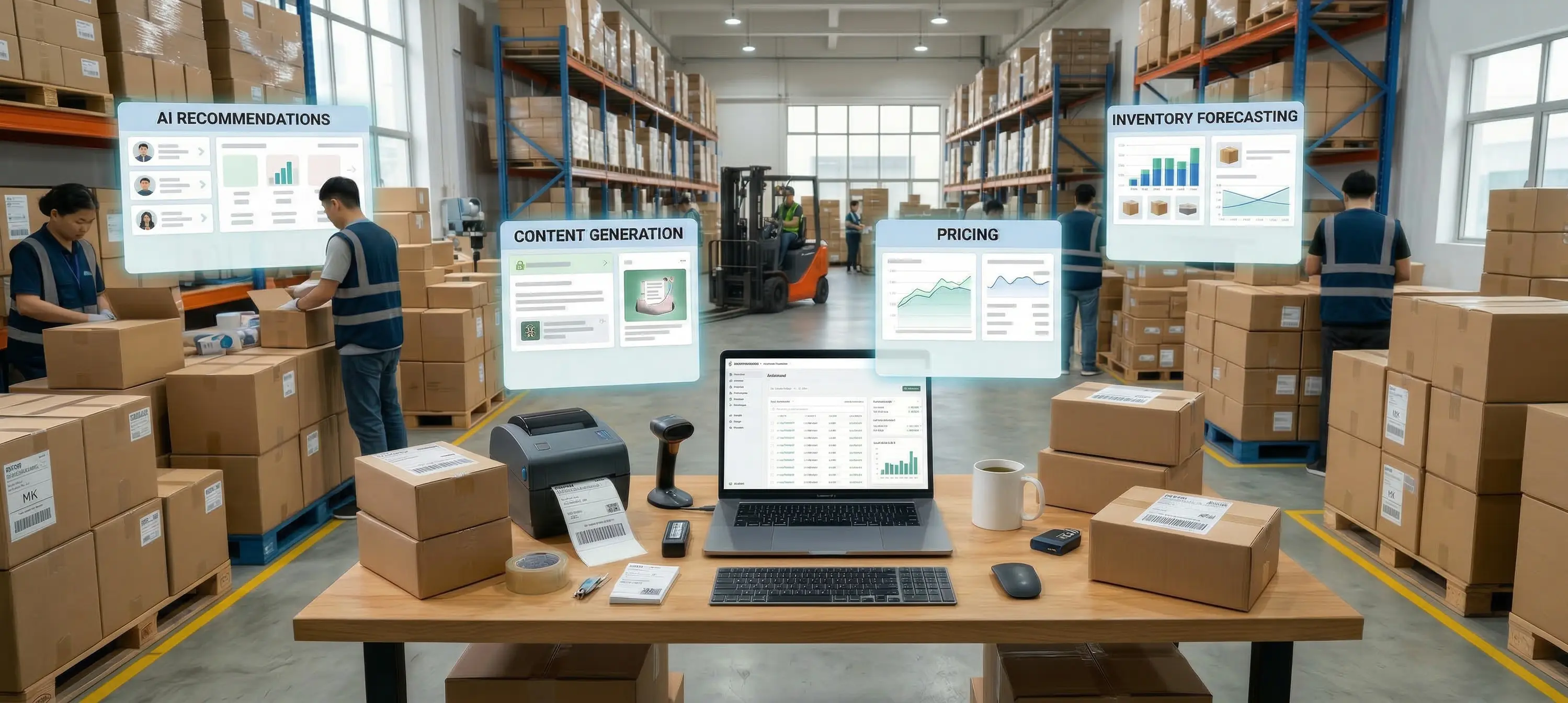
For modern merchants, the question has shifted from "Should we use AI?" to "How fast can we implement it strategically?" AI in Ecommerce is becoming the digital nervous system of successful brands, powering everything from invisible operational efficiencies to highly visible, magical customer experiences.
At Wave Commerce, we are seeing firsthand how AI transforms ecommerce stores from passive storefronts into proactive growth engines. In this article, we will dissect the global trends and use cases, zoom in on the unique landscape of Hong Kong, explain what brands are leading this revolution, and show you how to architect an AI strategy that delivers true ROI.
Part 1: Global Blueprint - AI in Ecommerce Trends & Use Cases
Global spending on AI in retail is expected to skyrocket in the coming years. This investment is driven by AI's ability to solve two legacy ecommerce problems simultaneously: reducing operational costs and increasing customer lifetime value through relevance.
Here is a detailed look at the core trends and use cases shaping the global landscape.
1. The Rise of Agentic Commerce & Personalization 2.0
Traditional personalization was reactive: "You bought a shirt; here is a tie." AI personalization is predictive and dynamic. We are entering the era of Agentic Commerce, where AI agents don't just recommend, but they take action.
- Real-time Hyper-Personalization: AI analyzes millions of data points such as past purchases, browsing behavior, session context, referral source, and even local weather to construct a unique storefront for every visitor in real time. Product sorting, homepage banners, and navigation menus shift dynamically to match individual intent.
- AI Shopping Assistants: Forget basic scripted chatbots. New generative AI assistants act as personal stylists or technical experts. They understand natural language, can answer complex queries (e.g., "I need a durable tent for a rainy weekend in Scotland under $300"), compare products, and guide the user all the way to checkout.
2. Generative AI as a Content & Creative Engine
The bottleneck for most ecommerce teams is content creation. Generative AI has turned this bottleneck into a competitive advantage.
- Automated Product Storytelling: AI tools (like Shopify Magic) can generate thousands of SEO-optimized, on-brand product descriptions in minutes. More advanced implementations analyze which description variants convert best and automatically update the store.
- Visual Asset Generation: AI can now remove backgrounds, place products in realistic lifestyle settings (virtual staging), and even generate models of different body types wearing apparel. This dramatically reduces photography costs and speeds up time-to-market.
3. Smarter Operations: Predictive Logistics & Pricing
AI’s greatest impact is often invisible to the customer but highly visible on the balance sheet.
- Predictive Demand Forecasting: By analyzing historical sales data alongside external signals like social media trends, economic indicators, and seasonal patterns, machine learning models predict future demand with uncanny accuracy. This prevents stockouts of hot items and reduces costly overstock.
- Dynamic Pricing Optimization: AI allows merchants to adjust prices on the fly based on competitor pricing, stock levels, and consumer demand. This ensures maximum margin on high-demand items and efficient clearance of slow-moving stock, without manual intervention.
- Fraud Detection & Risk Management: Machine learning models establish a baseline of "normal" transaction behavior. They can flag anomalous orders such as unusual shipping addresses combined with high-value cart items in milliseconds, preventing chargebacks before they happen.
Part 2: The Local Context - AI in Ecommerce Hong Kong
Hong Kong represents a unique retail environment where dense physical retail meets a highly digitized, mobile-first population. The adoption of AI in Ecommerce HK is accelerated by consumers who demand extreme convenience and speed.
Key Hong Kong AI Ecommerce Trends:
- Omnichannel Integration (O2O): Hong Kong shoppers constantly switch between digital browsing and in-store purchasing. AI is the bridge. Smart systems use online browsing data to empower in-store staff via POS tablets, or trigger personalized offers via WhatsApp/SMS when a customer is near a physical branch.
- Conversational Commerce on Social Apps: In HK, commerce happens inside WhatsApp, Facebook, and Instagram. AI-powered agents integrated into these apps are crucial for handling pre-sales inquiries, confirming inventory, and even processing orders within the chat thread, matching the fast-paced HK lifestyle.
- Localized Generative AI: Effective AI in HK must understand the nuance of traditional Chinese characters, Cantonese slang, and the mixture of English and both traditional and simplified Chinese common in local communication. Merchants are increasingly using localized AI tools to generate marketing copy that feels authentic to the local market.
Part 3: Why Shopify is Leading the AI Revolution
Many platforms offer AI plugins. Shopify has embedded AI into its core architecture. Shopify isn't just giving merchants tools; they are architecting a smarter ecosystem.
Why Shopify Leads:
- Shopify Magic: This is the native generative AI foundation integrated across the entire platform by default. It allows merchants to instantly generate product descriptions, marketing emails, and blog posts directly within their existing workflow.
- Shopify Sidekick: This is the ultimate co-pilot for merchants. Sidekick is a conversational AI assistant that understands store data. A merchant can ask, "Why are my sales down this week?" and Sidekick will analyze the data, point to potential reasons (e.g., a drop in traffic from a specific source), and suggest actions (e.g., creating a discount code or updating a collection banner).
- Accessible Democratization: Shopify makes enterprise-grade AI accessible to merchants of all sizes. Features that used to require a massive R&D budget are now available at the click of a button for a small D2C brand.
Learn more about Shopify AI in our article here.
Part 4: How Wave Commerce Helps You Architect for AI
While Shopify provides the tools, realizing the full potential of AI sometimes requires a strategic architect. At Wave Commerce, as a longtime Shopify Partner, we help ambitious brands move beyond "installing a plugin" to "engineering an intelligent ecosystem."
How Wave Commerce architects your AI success:
- Data Architecture Optimization: AI is only as good as the data it is fed. We help structure your product catalog, customer data, and operational data so that AI agents can accurately extract meaning and make autonomous decisions.
- Complex Omnichannel Workflows: We specialize in O2O. We build the infrastructure that unifies your online Shopify data with physical POS systems, allowing AI to power personalized experiences regardless of where the customer touches your brand.
- Strategic AI Integration: We don't just implement; we architect. We help you identify which AI use cases will drive the highest ROI for your specific business model, whether it’s dynamic pricing, advanced loyalty triggers via our OMNI Loyalty solutions, or localized conversational commerce.
Conclusion
AI in Ecommerce is the defining technology of this decade in retail. It is transforming efficiency, redefining personalization, and separating market leaders from followers.
Whether you are looking to save time on content, optimize your inventory, or provide a magical shopping experience for your customers in Hong Kong or globally, Shopify provides the platform, and Wave Commerce provides the expertise to make it happen.
Contact Wave Commerce today to discuss how we can architect an AI strategy for your ecommerce store.
Explore more stories
%204%20(1)%20(1).webp)


A brand of Visual Squares Limited.
Shopify Expert. All rights reserved.
Terms of Use | Privacy Policy
