BLOG
What is OMO? Everything You Need to Know About OMO Hong Kong
If you are asking 'What is OMO?', you are already taking the first step toward modernizing your business. Below, we answer your biggest questions: from defining the OMO concept and exploring local Hong Kong case studies, to showing you how to implement the right technology to make it happen.
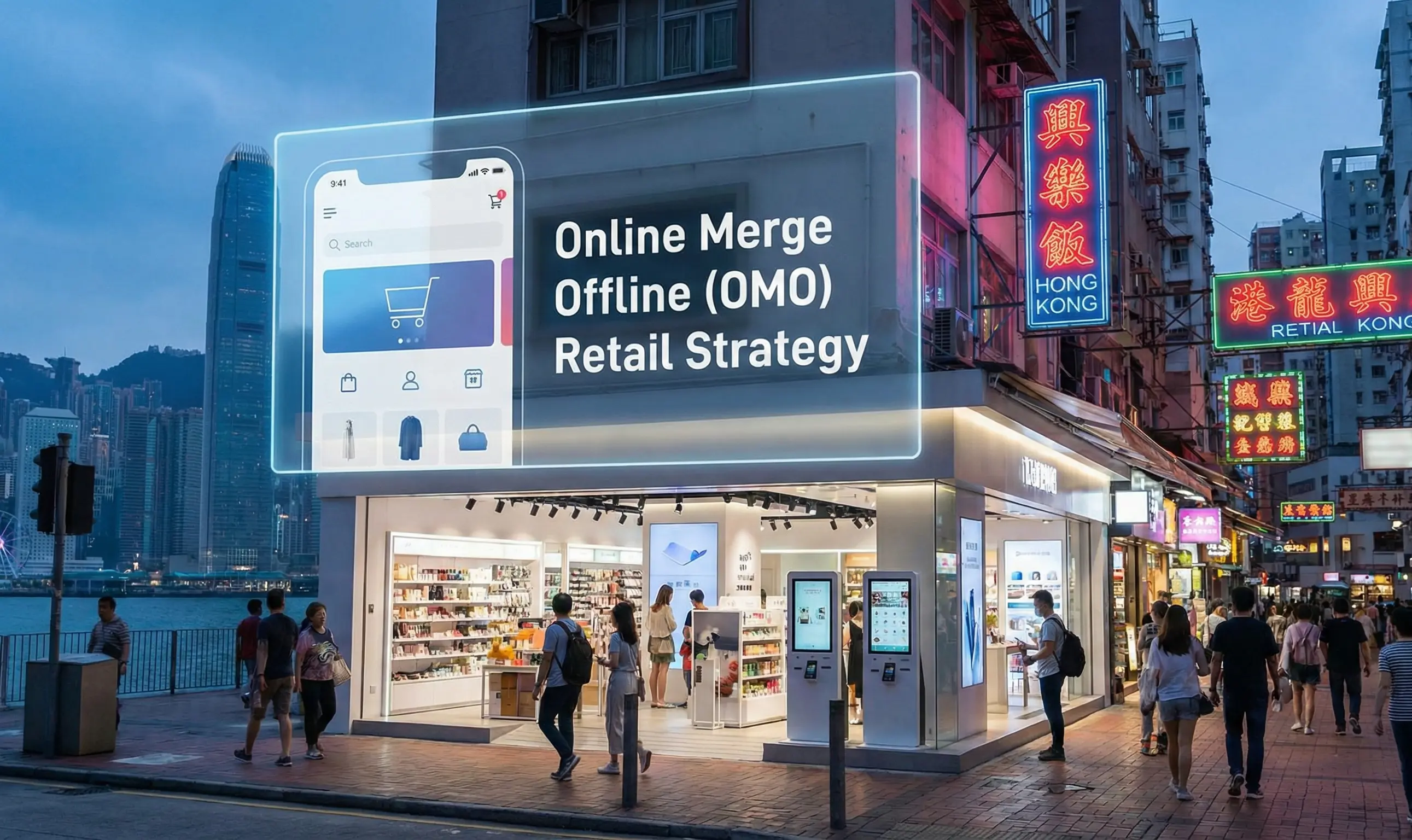
Our team at Wave Commerce are experts in all things retail and ecommerce, and have been supporting brands in creating award-winning OMO retail strategies since 2011! To help you navigate this shift, we have compiled a list of common questions to explain what OMO is and how it applies to our unique retail environment in Hong Kong.
What Does OMO Mean?
OMO stands for Online Merge Offline.
In an OMO model (or looking at an OMO business), the customer journey is fluid. A shopper might discover a product on Instagram, visit a physical store to touch and feel it, scan a QR code on the shelf to read reviews, purchase it via a mobile app, and have it delivered to their home. Data, inventory, and customer profiles are synchronized in real-time, creating a single, unified shopping experience.
What is NOT OMO? Businesses where a loyalty program, for example, is different online than offline. Many brands, believe it or not, still have 2 separate loyalty programs (one for ecommerce, and one for in-store), which is frustrating for customers as the points they earn don’t accumulate for every transaction they make if they shop across channels. The same can be said for businesses where you have to create separate accounts on their ecommerce store vs in-store, regardless of whether it is a loyalty program or not. Another example of what is not OMO would be a case where you WhatsApp or live chat with a business with a straightforward question such as return information, only to have them instantly ask you to call or email another number. Customers hate being bounced around like a hot potato, and they especially hate having to repeat themselves each time. True OMO businesses have a centralized communication and CRM ticketing system, where the full context of the enquiry will be shown to all operators needed to answer/support the enquiry - even in-store.
What is OMO in Hong Kong?
In Hong Kong, OMO takes on a very specific flavor due to our city’s density and consumer habits.
"OMO in Hong Kong" is often defined by convenience and speed. Because the city is so compact, shipping costs and times are low, but many customers still prefer "Click and Collect" options to avoid missing deliveries at home during work or due to their living arrangements
Common OMO scenarios in Hong Kong include:
- Buy Online, Pick Up In-Store (BOPIS): Customers order via an ecommerce store and pick up the goods at a retail branch or an SF Express locker on their way home. If you are on Shopify, apps like HK Pickup: Store and SF Express facilitate this very easily.
- Endless Aisle: A customer visits a small boutique in Causeway Bay. The specific size or color they want isn't in stock due to limited shelf space. The staff uses the POS to order the item from the warehouse or another branch and ship it directly to the customer's home, or the current Causeway Bay branch. Thus, supporting the customer in getting their desired goods at their desired location. Shopify POS, for example, can facilitate this natively as the POS is directly synced with the full online Shopify catalog.
- Unified Membership: A customer earns points buying bubble tea via an app and redeems those same points instantly at the physical counter using a QR code. OMNI Loyalty is a top choice used by many leading brands in Hong Kong to facilitate OMO loyalty across their online, offline, and pop-up shops.
What is the Difference Between OMO and O2O?
The concept of "O2O" (Online-to-Offline) focuses on driving digital traffic to physical stores (or vice versa) in a one-way direction. OMO, on the other hand, is about complete integration. It dissolves the boundaries between the two channels.
Why should Hong Kong retailers care about OMO?
Hong Kong has one of the highest mobile penetration rates in the world, yet physical retail remains a favorite pastime. OMO allows retailers to maximize the value of their high-rent physical spaces like brick-and-mortar stores and pop-up shops (or even trade shows and events).
Instead of using a shop purely for stocking and displaying inventory, an OMO strategy turns the shop into an "experience center". It allows you to capture sales from tech-savvy customers who demand the flexibility to shop whenever and wherever they want, without losing the personal touch of face-to-face service.
What are the benefits of OMO for my business in Hong Kong?
Well, we all know Hong Kong is a city known for its incredibly high retail rents and fierce competition. Adopting an OMO approach offers distinct advantages for Hong Kong merchants:
- Make Every Square Foot Count: Retail space is premium. With an OMO strategy, you don't need to jam every SKU into your physical shop. You can keep a smaller, curated selection in-store for customers to touch, while using "Endless Aisle" technology to sell products from your warehouse or other branches that aren't physically on the shelf.
- Cater to the "Now" Consumer: OMO features like "Buy Online, Pick Up In-Store" (BOPIS) or pickup at SF Express Lockers appeal to customers who want to secure a hot item online during their lunch break and pick it up on their commute home, saving them shipping fees and waiting time.
- Maximize Inventory Efficiency: By pooling your online and offline stock into one unified view, you reduce the risk of "dead stock" sitting in a backroom while online demand is high. Conversely, you prevent the embarrassment of selling an item online that was just bought by a walk-in customer.
- Data-Driven Personalization: When you know that the customer walking into your Tsim Sha Tsui branch is the same person who buys from your website every month, your staff can offer better recommendations and higher-quality service. This "single view" of the customer builds long-term loyalty in a market where consumers are spoiled for choice.
- Customers Expect It: Customers actually have very high expectations for customer experience. Once one business started doing OMO well, they expect it everywhere. And OMO has been done well by many businesses for 10 years now. So time to jump on the bandwagon!
How can I start implementing OMO with my current setup?
The most critical step is ensuring your systems can "talk" to each other. If your retail POS (Point of Sale) system is completely separate from your website, you cannot achieve true OMO.
This is where platforms like Shopify shine. By using Shopify POS for your physical locations, your online and offline sales live on the same platform. This ensures that when you sell a pair of sneakers in your Mong Kok store, the inventory is instantly updated on your website, preventing overselling and ensuring your data is always accurate. Concepts like endless Aisle and Buy Online Pickup In-store become super easy!
However, moving from legacy systems or other fragmented commerce tools to a modern unified cloud platform can be complex. This is where Wave Commerce comes in. As a dedicated Shopify Partner in Hong Kong, we specialize in helping brands architect this integration. We can assist you in mapping out your needs and optimal strategy + tools, migrate your product data, set up Shopify POS hardware in your retail outlets, and train your staff on how to manage the unified dashboard. We ensure the technical "merge" is seamless so you can focus on the customer experience.
Why is Shopify good for OMO in Hong Kong?
It is a fair question to ask, isn’t it? Can a global tech giant from Canada really cater to the local OMO needs of Hong Kong retail?
While Shopify is the leading international ecommerce platform, it is arguably the best engine for OMO in Hong Kong precisely because of its ecosystem. It allows you to build a foundation that is globally robust but locally adapted. Here is why it works for the Hong Kong market:
- Native OMO Architecture: Unlike older systems where the ecommerce site and the retail POS are two different pieces of software glued together, Shopify offers Shopify POS. This native integration means your inventory, customer data, and sales reports are unified from day one, without needing expensive custom development.
- Hong Kong-Specific Integrations: Shopify’s app ecosystem is vast and includes solutions built specifically for Hong Kong. You can easily plug in local favorites:
- Payments: Offer PayMe, AlipayHK, and FPS at checkout.
- Logistics: Integrate with SF Express for automated waybills and locker pickups.
- Language: Operate a storefront seamlessly in Traditional Chinese and English.
- Messaging: Offer seamless WhatsApp support with live Shopify order and purchase history etc for excellent support.
- Speed to Market: Shopify allows you to launch an OMO-ready store and POS system with the world’s highest converting checkout experience in record time.
While Shopify provides the powerful infrastructure, partners like Wave Commerce help provide further support, customizations, and are on-hand to deliver more complex setups.
As a Shopify Plus Partner, we bridge the gap between the global platform and local needs. Whether it is customizing your checkout flow for Hong Kong shoppers, migrating complex data from an old POS, or implementing innovative OMO strategies, we ensure that Shopify feels entirely local to your customers and on-brand for your business.
Can I synchronize my loyalty program across online and offline channels?
Absolutely, and this is a key pillar of OMO. Customers find it frustrating when they cannot use their online VIP discounts in-store, or the points they earned by shopping online can’t be used in a Tsim Sha Tsui branch.
To solve this, you can utilize Shopify-integrated apps designed for this exact purpose. For example, solutions like OMNI Loyalty allow you to create a unified loyalty program. A customer can walk into your store, identify themselves via their mobile number or a digital member card, and instantly earn or redeem points that are synced with their online account. This encourages repeat purchases regardless of which channel the customer chooses.
Spotlight: How OMNI Powers OMO Loyalty
To bridge the gap between your Shopify online store and your physical retail presence, OMNI Loyalty offers specific features designed for the Hong Kong market. Here is how it helps you merge the two worlds:
Key Features:
- Unified Customer Profiles: OMNI creates a single source of truth for customer data. Whether a client shops on your website or at your store in Causeway Bay, their purchase history and points balance are stored in one central profile.
- Mobile Number Identification: In Hong Kong, customers prefer using mobile numbers over email addresses for memberships. OMNI allows in-store staff to look up customer profiles instantly using just their phone number directly on the POS.
- OMO & Redemption: Customers can earn points on online orders and redeem them in-store (and vice versa).
- Shopify POS Integration: OMNI lives inside the Shopify POS interface. Your staff does not need to switch devices or apps to check points or apply rewards, it happens directly within the checkout flow.
- Tiered VIP Memberships: Set up different tiers (e.g., Silver, Gold, Platinum) based on total spending across all channels, not just one.
Business Benefits:
- Increased Customer Retention: By allowing points to be used anywhere, you remove friction. Customers are less likely to "waste" points and more likely to return to your shop to redeem them.
- Faster In-Store Checkout: With mobile number lookup and POS integration, staff can identify members and apply discounts in seconds, preventing long queues during busy weekends.
- Better Customer Insights: You gain a complete picture of shopping habits. You can identify customers who browse online but buy offline, allowing you to tailor your marketing emails specifically to their behavior.
- Professional Branding: A branded loyalty experience that works seamlessly makes your business look polished and tech-savvy, building trust with your customers.
Interested to learn more about OMNI Loyalty? Contact our team today for a consultation!
Already on Shopify? Install it now!
What about logistics? How does delivery fit into OMO?
In Hong Kong, logistics is a major touchpoint for OMO. You need to offer flexibility.
Your online checkout should offer local favorites like SF Express pickup options alongside standard home delivery. There are Shopify apps specifically built for the Hong Kong market that allow customers to select the nearest SF Locker or convenience store directly at checkout. This not only improves the user experience but also reduces failed delivery attempts.
What are some OMO Hong Kong case studies?
The best way to understand OMO is to see it in action. At Wave Commerce, we have helped numerous brands transform their retail operations from siloed channels into unified success stories. Here are three real-world examples:
1. Mentholatum: Unifying DTC and Mass Retail
- The Challenge: A household name in health and beauty, Mentholatum wanted to launch a Direct-to-Consumer (DTC) online store, and drive customers to try samples at their 1,000+ third-party retail partners (like Mannings, Park n Shop, and Watsons) to experience their products in real life.
- The OMO Solution: Using Shopify Plus and OMNI, Wave Commerce built a unique digital membership experience. Customers can sign up online to receive digital coupons, which they can then redeem physically at chain stores across Hong Kong.
- The Result: A seamless loop where digital engagement drives physical foot traffic, while capturing valuable customer data that was previously lost to third-party retailers.
- Read the full Mentholatum case study
2. Ms. Chu Soap & Beaut: Empowering Staff as OMO Ambassadors
- The Challenge: This beloved local skincare brand needed to bridge their online store with their physical shop, but they faced a common hurdle: retail staff often view the online store as a competitor that "steals" their commission.
- The OMO Solution: They implemented a "Staff Attribution" feature via OMNI. When a staff member helps a customer in-store, they can link that customer's profile to their staff ID.
- The Result: If that customer goes home and buys online later, the staff member still gets the commission. This turned their retail team into active promoters of the website, doubling their average order value and creating a truly unified team culture.
- Read the full Ms. Chu case study
3. Logitech: The "Logitech Club" Experience
- The Challenge: Logitech wanted to create a direct relationship with their Hong Kong fans, moving beyond just selling hardware to building a community.
- The OMO Solution: They launched "Logitech Club," a loyalty-centric commerce platform powered by Shopify POS and OMNI. This setup synchronized inventory and member points across their retail locations and their online store.
- The Result: A flexible "buy anywhere, redeem anywhere" ecosystem. They also utilized O2O event marketing, where customers could register online to redeem exclusive gifts at the Hong Kong Computer Festival using a simple QR code scan.
- Read the full Logitech case study
Is building an OMO strategy complicated?
It can seem daunting, but it doesn't have to be. In the past, retailers had to build expensive custom software to connect their website and physical stores. Today, the advantage of modern commerce ecosystems is that the heavy lifting is already done for you.
With Shopify as your foundation, the core infrastructure, syncing inventory and customer data is built-in rather than bolted on.
For specific needs like OMO rewards, solutions are readily available. You can implement tools like OMNI Loyalty to instantly turn on unified loyalty without needing a development team. Instead of building from scratch, you are simply configuring existing, powerful tools. And if you need guidance on how to knit these systems together (like integrating local payment gateways or migrating data), partners like Wave Commerce are here to manage the technical setup, ensuring your OMO launch is smooth and stress-free.
Contact us today to discuss OMO for your business.
Explore more stories
%204%20(1)%20(1).webp)

A brand of Visual Squares Limited.
Shopify Expert. All rights reserved.
Terms of Use | Privacy Policy
